Hyatt’s Brutal 2023-2025 Devaluations

Everywhere you look, people are telling you to transfer bank points to Hyatt because “Hyatt is the best hotel program.” The brand is practically Teflon. It’s about time that someone call it out, so we ran the numbers.

Hyatt is often the best hotel program. It is also a program that has been devaluing year after year, in very predictable ways, while people keep pretending it is some sort of sacred cow. If you have been redeeming Hyatt points for aspirational hotels, popular leisure destinations, school holiday travel, or anything involving free night certificates, you already know what happened from 2023 through 2025:

Prices went up.

Not for everything. Not evenly. Not in a way that shows up cleanly in a simple average. But the places and dates people actually want went up, and they did so consistently, and they did so by a surprisingly high percentage.


The Math Behind Points Bookings

Hyatt pays hotels in actual money when you redeem. The amount of money varies depending upon where you book, how you book, and how busy the hotel is on the night that you book.

The reimbursement math usually looks something like this:

  • When occupancy is low, the program pays an amount closer to marginal cost (think the cost of housekeeping).
  • When occupancy is high (e.g. the hotel is basically full), the program pays an amount closer to the nightly rate.


Now take the 2023-2025 travel environment: strong demand, higher average daily room rates, higher operating costs, and lots of full hotels in the markets people actually travel to. That means more award nights trigger the expensive reimbursement tier. This left Hyatt with a two choices:

  • Accept worse economics for the loyalty program, or
  • Raise the cost of redemptions


Hyatt chose the second option. Repeatedly.


How Hyatt Has Devalued The Program

1) The Category Shuffle

This is the annual game. Hotels move up and down categories. The important part is that Hyatt category moves are step changes, not gentle inflation. Some examples:

  • Category 4 to 5: 15,000 to 20,000 points (33% more)
  • Category 7 to 8: 30,000 to 40,000 points (33% more)
  • Category 1 to 2: 5,000 to 8,000 points (60% more)


So yes, luxury got more expensive. However, budget hotels are where Hyatt members really get wrecked.

2) Peak Pricing

Peak and off-peak pricing gives Hyatt a way to raise prices on the exact dates you want, while keeping the award chart on the website so everyone can keep saying “Hyatt still has an award chart.”

Example (Category 5):

  • Off-peak: 17,000
  • Standard: 20,000
  • Peak: 23,000


On paper, fine.

In practice, for high-demand hotels on high-demand dates, you see a lot of Peak. Standard becomes something you get on random weekdays in the shoulder season. Peak pricing is a stealth tax on normal travel patterns.

3) The Category 4 Certificate Cliff

Hyatt’s Category 1-4 free night awards (credit card, milestone rewards) are binary. They work at Category 4 and below. The moment a useful hotel moves to Category 5, your certificate is worthless there.

So Category 4 to 5 is not just “33% more points.” For certificate users, it is “you cannot use this anymore.” Hyatt has leaned into this hard, with many hotels moving up to Category 5.


What Happened Each Year

2023: Post-Pandemic Inflation

This was the first major reset after global travel demand came back. And the devaluations were brutal:

  • Total properties changing: 372
  • Up: 214
  • Down: 152
  • Net: +62


The net number is not the real story. The real story is where the up-moves happened: high-demand leisure destinations and major US markets.

Category 4 cliff examples:

  • The Bellevue Hotel (Philadelphia): 4 to 5
  • Hyatt Regency Orlando International Airport: 4 to 5
  • Hyatt Regency Newport Beach: 4 to 5


Luxury pressure was already visible too:

  • Andaz Costa Rica Peninsula Papagayo: 6 to 7 (25k to 30k)


2023 was the year Hyatt started making it clear that “easy value” was a target.


2024: Fewer Moves, Uglier Ratio

2024 had fewer total changes than 2023. The directionality got worse:

  • Total properties changing: 183
  • Up: 137
  • Down: 46
  • Net: +91


This is the year where you saw a lot of quotes about an “average points increase” that sounds small, while ignoring that percentage pain shows up at the low end. A few thousand points is not the same everywhere. Category 1 to 2 is a 60% hit!

2024 also sharpened the all-inclusive repricing. When an all-inclusive moves up within the A-F system, the increases are meaningful, and Peak magnifies it further. And the Category 4 certificate usefulness continued to get chopped down:

  • Thompson Chicago: 4 to 5
  • Grand Hyatt Washington: 4 to 5
  • Hyatt Regency Boston: 4 to 5


By the end of 2024, the direction became obvious: Hyatt is pushing strong full-service properties out of certificate range.


2025: Category 8 Becomes The New Luxury Ceiling

2025 is the year the “aspirational ceiling” moved:

  • Total properties changing: 151
  • Up: 118
  • Down: 33
  • Net: +85


The defining move was Category 8 expansion. Category 7 to 8 is not a small change:

  • Standard: 30,000 to 40,000 (33% more)
  • Peak: 35,000 to 45,000 (about 28% more)


Psychologically, this matters because Hyatt redemptions used to feel capped at 30k standard for Hyatt-branded hotels. Now the number you actually run into on desirable dates is 45k.

Japan getting hit hard makes sense in a market-dynamics way (weak currency, high inbound demand, crazy cash rates). But it also creates a real elite-benefit problem: certificates capped at Category 7 stop working at the flagships people care about.


Peak Pricing: Stealth Inflation

Category changes happen once a year. Peak pricing hits every time you try to book:

  • Category 1: 5,000 to 6,500 (30% more)
  • Category 7: 30,000 to 35,000 (16.7% more)
  • Category 8: 40,000 to 45,000 (12.5% more)


The bigger issue is distribution. Peak pricing clusters around the dates people actually travel: weekends, holidays, school breaks, and major events. So even if a hotel never changes category, your real redemption cost can still creep upward. And when category moves stack with Peak pricing, you get the real “this is why it feels awful” effect.

Take the Andaz Costa Rica for example:

  • 2022: 25k (Category 6, flat)
  • 2025 Peak: 45k (Category 8 Peak)


That is an 80% increase in cost for the same room on a peak date.


True Devaluation From 2023 to 2025

How much did Hyatt really devalue? There are two answers, and the difference between them is cause for a lot of online arguments.

The Marketing Answer

Most properties do not move each year. So if you average across the entire Hyatt universe, the inflation looks like a modest single-digit number. Pay no attention to the devaluation behind the curtain!

This is technically defensible. It is also not how people really redeem.

The Real Answer

The increases are concentrated in the parts of the program people actually want:

  • Category 4 to 5 (certificate destruction)
  • Category 7 to 8 (luxury ceiling lift)
  • Peak pricing on normal travel dates


This yields an effective devaluation for an engaged leisure redeemer in the neighborhood of the low-to-mid 20% range over the period.

This also likely tracks with your lived experience: if you chase sweet spots and travel during popular windows, Hyatt has gotten materially more expensive.


Hyatt Can Still Be The Best Deal (Anyway)

Even after all this, Hyatt still often beats competitors because the award chart preserves the possibility of outsized redemptions when cash rates go off the rails. Dynamic programs tend to compress value. Hyatt still lets you optimize.

The difference is that the “easy button” sweet spots keep disappearing. Category 4 certificates used to be a simple strategy. Category 7 used to feel like the aspirational ceiling. Both have been effectively nerfed. Hyatt is still a strong program. It is just not the same program you were playing a few years ago.

Our Harrowing Volaris Oversold Experience

Greetings from San Jose del Cabo, where we’re enjoying a long weekend before returning to our home airport of Vancouver. We have spent the past week in Mexico going through various bureaucratic processes to obtain Mexican residency for my spouse (that’s a whole separate topic). That took Monday through Thursday of this week, and we’re now celebrating with a long weekend in Cabo. We’re grateful to be here, because we almost didn’t get here.

We almost didn’t get to enjoy this perfect weather

A few months ago, I booked our travel. We flew Aeromexico to Mexico City via an economy class award ticket issued through Flying Blue (16.5k each, but I got a 25% transfer bonus so it was really just over 13k bank points per person). I wasn’t able to get a return flight from Mexico City with points, so I started looking at other airports and eventually found two economy class seats on WestJet from San Jose del Cabo, which I booked via Delta for 16k per person (since then, the price has gone up to 19k per person).

“OK, that will work, what can I make happen in Cabo?” I thought. I did some digging, and I was able to book an all inclusive resort called the Grand Decameron for 15,000 Wyndham points per night. Conveniently, I had enough points (earned from a credit card signup bonus), so I went ahead and did it. Great! Flight down, flight back, Mexico City hotel booked, resort booked for a long holiday weekend at a well below market price, and all I needed to figure out was how to get from Mexico City to San Jose del Cabo. Nothing was available with points, so I bought on price and schedule. That ended up being a Volaris flight from Felipe Ángeles International Airport (NLU), which is the new airport in Mexico City. Two tickets, with required upsells to check in at the airport (I assumed, correctly, that this would be necessary when traveling with someone who holds a Kazakh passport) and bring a carry-on bag, came to a little over $94. That seemed ridiculously cheap, but flights from this airport are a lot less expensive than the main airport in Mexico City. It has low operating costs, most flights are domestic, and it hosts almost exclusively low cost carriers.

I didn’t know anything about Volaris, but as I read more about them, one recurring theme came up: they’re notorious for overselling, and they play games with check-in to make you late for your flight. We showed up two hours before departure, and were the second in line. Volaris took a full 30 minutes to check in the person in front of us, so we wondered whether they were playing that game with us! Eventually the agent did check us in, though.

Except there was a problem. Our boarding passes said “STANDBY” in big, bold lettering.

The agent explained that Volaris was oversold and we had been put on a standby list. We’d have to check in at the gate, and if anyone else missed their flight, we’d be assigned seats. Otherwise, they’d either give us a refund or put us on the next flight. The only problem was, their next flight wasn’t until tomorrow. We headed to the lounge (which was amazing, uncrowded, and probably the best Priority Pass lounge I have ever visited) while I figured out backup options.

Viva Aerobus (another Mexican low cost carrier) had a 5:30pm flight with two seats available, and they were a little over $100 each. I figured that worst case, I’d grab those and at least we’d be able to check in to our hotel without losing a night. I teed it up and got it ready to go, and we headed to the gate. The flight was preboarding, but the gate agent took our “just kidding” standby passes and told us to wait. Everyone boarded ahead of us, there was some furious typing, many pictures taken with smartphones, and my spouse was handed a boarding pass with a seat number. I wasn’t handed a boarding pass. “Don’t worry, go ahead and board, I’ll catch up on the next flight” I said. Some more frowning, and typing, and a couple of calls on the radio, and a few minutes later the agent handed me a boarding pass on which she had written “9B.”

The husband and wife next to me preferred to sit together, so I got the aisle!

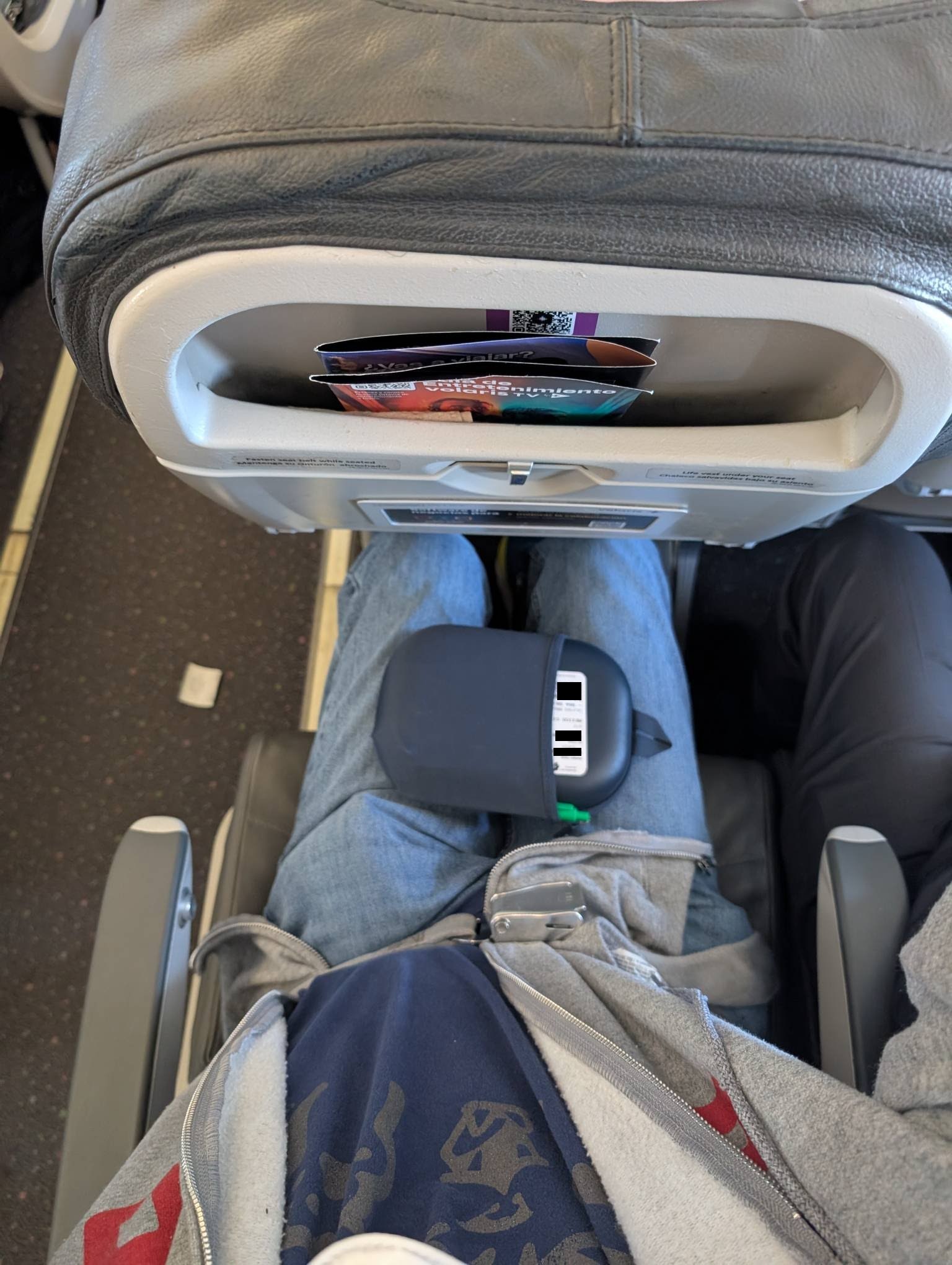
“Board now!” she said, as if this was somehow our fault. “The door is closing.” We high tailed it down the jet bridge and onto our flight. Miraculously, we both found overhead bin space, but given that this airline charges for it, it doesn’t seem like the overhead bins were as stuffed as they normally are. The door closed and we left on time. It was a dirty and tired A320, with some of the tightest seat pitch I have experienced this side of Ryanair, but it was a seat on a plane to Cabo on a schedule that wouldn’t torpedo all of our other arrangements.

When I booked the ticket, I didn’t really consider the possibility that the airline would say “just kidding” in a way that I largely don’t have recourse. This is because I’m used to flying in the US and Canada, where both countries require hefty compensation for involuntarily denying boarding to passengers. This is not the case in Mexico! All that Volaris would have owed us is a refund for our tickets, plus a 25% penalty. That wouldn’t come anywhere close to covering a last minute, walk-up fare on another airline. Given the limited financial exposure, Mexican domestic airlines happily oversell domestic flights (this seems less common on Aeromexico because so many of their passengers connect internationally where consumer protections may be stronger).

In the end, fortunately, it worked out. But holy smokes, that was one heck of a nail-biter! And that’s why I’ll add another dimension to using NLU airport in the future. If you’re making travel arrangements with Mexican airlines, your confirmation might be as solid as you get from a Tinder date. If that’s the case, it’s better to fly from an airport with plenty of backup options. That may well but NLU, but it might not be. Be sure to check.

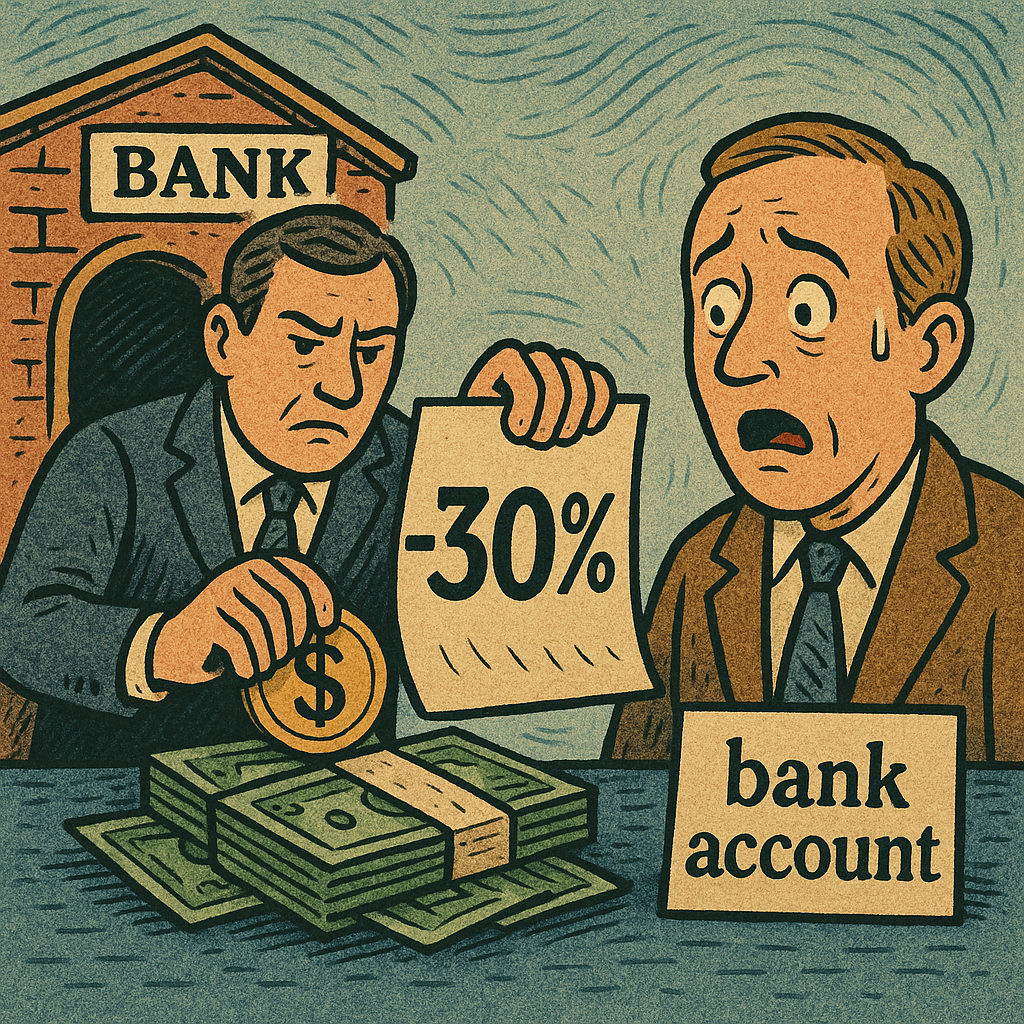
Bank Points Aren’t Safe From Devaluation

I got a breezily worded letter in the mail yesterday from Citi. “You may not have gotten a copy of the ThankYou Terms And Conditions when you signed up for your card,” it said. “Don’t worry, there’s nothing you need to do.” The letter included a link to the ThankYou rewards terms page which didn’t really show anything obviously untoward. There was a section on shutting down accounts for suspected fraud which seemed fairly aggressive, but banks tend to be aggressive about fraud, so this wasn’t exactly a surprise. And Citi hasn’t been a bad actor in this regard (unlike Amex).

Well, that all changed today. Citi announced a devaluation of ThankYou points, effective 7/27/2025 (at least they gave some advance notice, unlike most airline programs). The following transfers are being devalued:

  • 1,000 ThankYou Rewards Points are transferable for 800 Emirates Skywards points (20% devaluation)
  • 1,000 ThankYou Rewards Points are transferable for 700 jetBlue TrueBlue Points (30% devaluation)
  • 1,000 ThankYou Rewards Points are transferable for 1,400 Choice Privileges® Points (30% devaluation)
  • 1,000 ThankYou Rewards Points are transferable for 700 Wyndham Rewards® Points (30% devaluation)

This seems kind of … random? Emirates, jetBlue, and Wyndham Rewards are some of Citi’s least valuable transfer partners. Choice Privileges used to be somewhat valuable, and sometimes still is for niche redemptions, but they have been devaluing the program like crazy.

So far, if you have a Citi Strata Premier, it looks like only Emirates is being devalued. The other programs don’t appear to be (yet). However, it’s hard to say whether this is an oversight or what, because it’s Citi we’re talking about. They’re consistently inconsistent.

Will this really amount to much? It’s hard to say. Airlines have been devaluing their points, but apart from HSBC, banks haven’t really gotten in on the game yet. Instead, bank points have been effectively devalued because of all of the devaluations of their transfer partners.

I think this sets a bad precedent. Banks don’t devalue money in your bank account, why should they devalue your points? People keep their points with a bank program because these programs have been relatively stable and predictable, with a floor value of at least one cent per point. There are even transfer bonuses when transferring points into certain programs, which has somewhat helped to offset devaluations.

That being said, I’ll be re-evaluating my participation in the Citi ecosystem. I have been putting all of the spend I reasonably can through Citi cards in order to earn ThankYou points. However, if the value of these are going down, there’s a lot less reason to participate. After all, I can effectively earn Choice points at the existing ratio in the new Wells Fargo program, using the same card pairing of a 2% cashback card (which is convertible to transferable points) with a travel rewards card (the Wells Fargo Autograph Journey). There aren’t as many airline transfer partners, but I have spent most of my Citi points on hotels anyway. Given Citi’s $95 annual fee, I’m thinking of dumping my cards with them and switching to Wells Fargo’s program instead. It’s relatively hard to earn Citi points (there aren’t opportunities for huge transfer bonuses like with the other issuers) and the only really good transfer partners other than Choice are the I Prefer and EVA programs. If I had the ability to earn a ton of points through spending, the card product would be more attractive, but we try to avoid spending actual money over here at Seat 31B. So, it’s a complicated decision. Mine will probably be “churn and burn” though – Citi is already setting the precedent of devaluing your points in the bank, so doing more of it will likely prove irresistible.

Crazy Hotel Values With I Prefer Rewards and Citi ThankYou Points

You’re forgiven if you have never heard of “I Prefer Rewards.” I hadn’t until they were added as a Citi ThankYouPoints transfer partner. And when they were added, it mostly didn’t matter. The program was mostly useless because hotels in it seemingly weren’t required to offer any award inventory, so very little was available. The only thing you could realistically do was “cash and points” bookings at a handful of properties, which effectively cost about the same as booking a room outright.

Last month, with very little fanfare, all of this changed. There are very few things that I would call a “game changer” in award travel, but this is one of them. I just booked a hotel in downtown Montreal, which I would actually have paid for, at a value of 3.1 cents per point for my Citi ThankYouPoints. This isn’t a ridiculously priced, top of market international chain hotel with 4-digit room rates I’d never pay. It’s at an upper midrange property (which, granted, is nicer than I usually go for) selling for $270 per night plus tax, and I was able to redeem just 7,500 Citi points per night for it.

I Prefer Rewards is the loyalty program of Preferred Travel Group, which is an oddball consortium of independent hotels operating under the following banners:

  • Preferred Hotels & Resorts
  • Beyond Green
  • Historic Hotels of America
  • Historic Hotels Worldwide


These are independent hotels, not chain hotels, and range in size from large to small. Brand standards are decidedly looser than major hotel chains, but high customer satisfaction and a high level of service is required to remain affiliated. These are good quality hotels, but you can expect that many of them are in historic buildings and/or interesting locations. The Broadmoor, for example, is a century-old Colorado Springs landmark five star property. It’s elegant, unique and special in all of the ways that a chain hotel isn’t, while unquestionably a luxury property.

The “I Prefer” loyalty program has been around for awhile, but has mostly been ignored because it didn’t have good redemption opportunities. The only real way to earn points in the program was to stay in affiliated hotels. Points earnings opportunities through paid stays are weak, and redemption opportunities were even more weak. The most I have been able to find written online about the program involves status match opportunities, which are pretty generous. Still, with only around 600 properties around the world, “I Prefer” has been a niche program at best.

I’ll get right to the point: The value is pretty incredible. Citi ThankYou points transfer at a 1:4 ratio to I Prefer, which means that 7,500 ThankYou points turns into 30,000 points in the “I Prefer” program. This is enough for a standard room at the 4-star Hotel Monville in downtown Montreal. The reviews are excellent, and the rooms are perfectly nice. Standard rooms are equipped with a king sized bed, rain shower, electronic safe, mini fridge, coffee and tea service, 50″ LED HDTV, and free WiFi.

Before last month, there was almost no availability at any I Prefer properties worldwide. It’s not what I’d describe as “wide open” today, but there is pretty reasonable availability through the end of the calendar, even on hard-to-book dates. What’s more, pricing isn’t variable beyond different redemption levels in which properties are placed (15k, 30k, 50k, 75k, 100k per night). Peak season dates cost the same as off-peak dates, weekends cost the same as weeknights, and holidays don’t cost more.

Is this good? Yes, it’s really very good. Over 600 hotels are now bookable at good rates, with industry-leading redemption value. We’re talking 50%+ better than average, in some cases. If I have learned anything playing the miles and points game, it’s “good deals don’t last” so I don’t think the values are likely to remain this high. The I Prefer program is new to the transferable points game, and they’re still learning.

The upshot? I think that Citi ThankYouPoints are the most valuable bank points you can currently earn, as long as you use the points to transfer to I Prefer and Choice Hotels. Given the ongoing drumbeat of Hyatt devaluations, nothing else in the hotel space really touches this. The value proposition of both, given the generous transfer ratios, is simply unbeatable. In my view, you should not waste ThankYou points on airline transfers, with one exception: 1:1 transfers to EVA AIR’s Infinity MileageLands program. This program can provide excellent value and availability for flights to and from Asia, and is really icing on the ThankYou cake.

Citi has definitely stumbled in the loyalty space compared to Chase, Capital One and American Express. They don’t offer generous signup bonuses. Their approval process is best described as “goofy.” They have been on-again, off-again when it comes to offering premium credit cards. The ThankYou program manages to be more confusing than Chase Ultimate Rewards (I’m not sure how this is even possible, but it somehow is). They even stripped travel benefits–not even providing secondary rental car insurance–from a card aimed primarily at people who travel (these have slowly been restored, but it seems clear the right hand didn’t know what the left hand was doing). So, it’s surprising to see them innovating here with a new and unique transfer partner. It seems that I Prefer is trying to become a competitive program, and they’re making a big splash with availability in order to do so. I wish them luck, but either way, burn your Citi points right now with some hotel bookings. Opportunities like this rarely last.

How I Fixed Chase Aeroplan Pay Yourself Back Failures

Chase issues a cobranded credit card with Air Canada Aeroplan. It has a very interesting feature called Pay Yourself Back. This card isn’t especially popular in the US, but I have gotten pretty good value out of it over the past year. Although I live 900 meters inside the US, my home airport is Vancouver. Being a cardholder allows a free checked bag, even on basic economy fares. The card is also a MasterCard, which can give better exchange rates in Canada (where I usually shop) than Visa, and most importantly is accepted at Costco where only MasterCard is accepted in Canada. In a typical year I’ll break even on bag fees alone by holding the card, but this card has a very interesting feature that has become the primary way that I redeemed Ultimate Rewards points this year.

Chase has a “Pay Yourself Back” feature on their Ultimate Rewards cards that allows you to request statement credits at a fixed value for point redemption in particular categories. They also offer this feature with the Aeroplan card, in which you can redeem Aeroplan points against any purchase categorized as travel at 1.25 cents per point. On its own, this doesn’t seem like all that great of a deal until you factor in stacking transfer bonuses. For every 50,000 points you transfer to Aeroplan from Chase Ultimate Rewards, Chase gives a 10% transfer bonus when holding the card. They have also offered 20-30% transfer bonuses throughout the year, and these stack with the transfer bonuses. I have taken full advantage of these opportunities to transfer Ultimate Rewards points, meaning that I have effectively gotten 1.625 cents per point in redemption value from Ultimate Rewards when using Pay Yourself Back.

Now, this may not sound all that exciting. “1.625 cents per point?” you may ask. “I can get 10 cents per point in value when redeeming for Emirates first class!” And yes, this is theoretically true, but this is Seat 31B you’re reading, not some fancy blog. Over here, we try to spend points on things that we’d have actually bought with cash, and when you view things in that light, 1.625 cents per point is really good.

Some cards come close. You can get 1.5 cents per point in value for Ultimate Rewards when carrying the Chase Sapphire Reserve and redeeming through the Chase travel portal. The problem with that is that you have to carry a card that doesn’t offer any airline benefits and has an effective $250 annual fee. You also have to book through the Chase portal, and the pricing tends to be higher than through other sources. So, using Aeroplan Pay Yourself Back, I have been able to book the cheapest flights (often, ironically, on Air Canada’s largest competitor WestJet) and independent hotels (which I generally prefer anyway vs. chain hotels–you might be shocked to learn that hotels other than Hyatt properties exist). I have redeemed hundreds of thousands of my Chase points this year this way, on travel that I would have otherwise bought with cash. To me, that’s huge. So early this month, when all of this stopped working, it was a major annoyance.

I logged onto the Chase Web site as I normally do, and tried to use Pay Yourself Back to reimburse a purchase as I often did. I filled in the amounts, clicked through to approve the transaction and… nothing. I’d just be thrown back to the homepage on the Chase Aeroplan Web site. So, I called Chase. One agent told me to wait a day and try again. Another agent tried to reproduce the problem on their end, and they could, but failed to escalate properly. Another agent filed a ticket, but nothing happened. Another agent filed a different ticket, where again nothing happened, and I was told to call back in a week. Finally, I got sick of the runaround and stopped in at a Chase branch today. They couldn’t solve the problem either, but did inform me that under no circumstances would they waive the annual fee despite the issues I was actively experiencing.

Finally, I called Aeroplan today for something entirely different. The 2FA settings weren’t working correctly on my account and I wasn’t sure why. The friendly agent informed me that my account was locked. I bought a new computer a couple of months ago and apparently, this completely freaked out Aeroplan’s security software which locked my account for no good reason, with no obvious notification that it had happened. She validated my account by asking a bunch of questions and then did whatever Aeroplan does on their end to unlock my account, which eventually worked. She also helped me sort out the 2FA problem, despite working overtime and needing to pick up her kid. So kudos to Aeroplan for at least helping to acknowledge and fix the problem they caused, versus Chase for its abject failure to communicate.

I was finally able to complete my Chase Pay Yourself Back transaction. Yay! So, if you’re having the same problem, check on the Aeroplan side whether your Aeroplan account is locked. The only indication that there is an issue is if you’re trying to redeem points directly in the Aeroplan program, in which case you’ll be prompted to contact Aeroplan’s call centre. You won’t see an indication of issues with your account otherwise because you can still search and buy flights, earn points, and fly Air Canada as normal. And there is no sensible error message on the Chase side; you just get thrown to a random section of their Web site.

I’ll just let things play out on the Chase side and see what happens. The issue no longer reproduces so I am expecting the ticket to be closed without Chase doing or fixing anything, or notifying me. They can probably stop sending me advertisements for private banking, though. If this is how well their credit cards work, I don’t want to try their wealth management products.

How Capital One Torpedoed Our US Green Card Application

Since getting married earlier this month, we’ve been busy assembling a giant package of documentation for Rakhat’s US green card application. The insane complexity of an I-485 adjustment of status application is another article in and of itself (particularly given where we live), but we finally got the forms filled out, and all of the documentation and evidence assembled. So finally, with the application fully complete, I attached Form G-1450 on the top with my Capital One Venture X card details filled in. I felt pretty confident in doing this because I’d used the same card for our original I-129F application, and everything went through just fine. I even earned points for the transaction! We sent the application off on Monday.

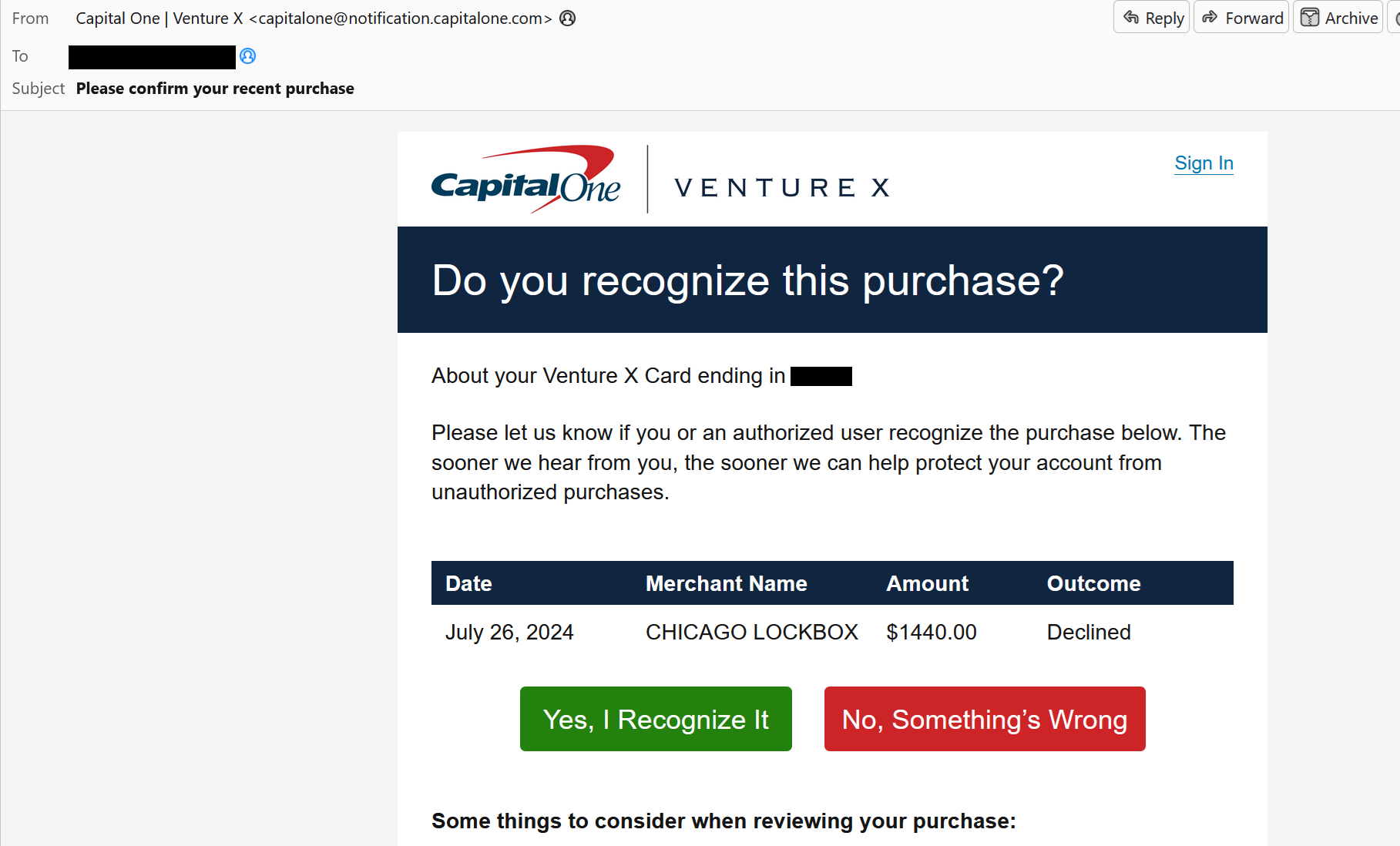
Yesterday afternoon, an email from Capital One rolled in: “Please confirm your recent purchase.” Uh-oh. I opened it up to see this:

I recognize the charge, and also, something is very wrong

Yes, I did recognize the purchase. It was the green card application fee. Why was it declined?

This is the most legitimate kind of charge possible. The kind that is basically never fraudulent. The charge was literally made by the federal government and there is essentially unlimited recourse against anyone making fraudulent payments to the government. Unless my account wasn’t in good standing, there would never be any legitimate reason to decline the charge. So, I thought maybe my autopay didn’t go through or something. Could it possibly be my fault?

Nope, not my fault!

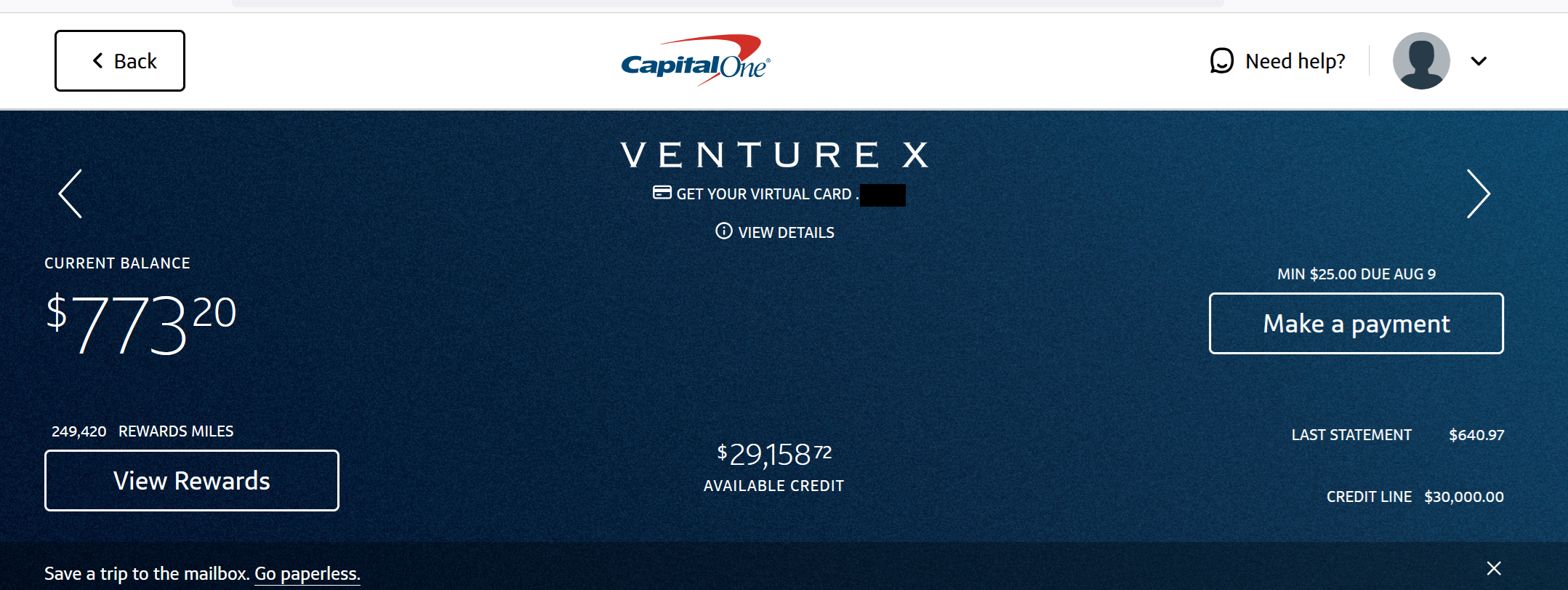
My account is current. I have over $29,000 in available credit. There’s nothing on my end that could possibly have caused this problem. However, Capital One laid off over 1,000 technology employees last year in a drive to replace them with AI. Don’t take it from me, you can read it on their own blog. So, as is increasingly common, Capital One has put dumb hallucinating AI bots in charge of important, serious things that have a very real impact on people’s lives. When this goes wrong, it goes spectacularly wrong.

The impact, of course, is significant. Immigration timelines are measured in months. We have to wait for our application to be returned, and file it all over again. Typically, this sort of unforced error will add 2 more months. In the meantime, Rakhat can’t leave the United States, and given where we live, this is a significant impact. There is only one flight a week to the US mainland. We don’t have a hospital, dentist or even a pharmacy here. It’s an extreme hardship that didn’t need to happen.

“Why did you trust Capital One?” some people will ask. “You should have sent a check!” Ironically, I made that decision to prevent fraud. Check fraud is rampant, and it’s a lot safer to use a credit card than to send a check in the mail these days. I won’t take the risk of a credit card transaction failing again, though, and will have to instead accept the risk of my checking account being drained by criminals.

In the meantime, should you trust Capital One for anything important or serious in your financial life–the kinds of things that absolutely, positively have to work? Given my experience, I cannot in good conscience recommend them. Their anti-fraud software product managers are bad at their job and should feel bad. Sure, use their card in retail situations where you can easily switch to another card if things go haywire. Their points program is exceptionally generous, and Capital One likely loses money on it. But don’t trust a Capital One card for anything that is truly important, and be sure to burn your points before they devalue.

How Amex Charged Me $100 And Then Tried To Ruin Our Wedding

I have been trying to figure out the best way to write about this because it’s so hard to believe it actually happened. I realize that what I’m about to describe is deeply personal, and I do try to keep the blog to topics that could impact other people. But the root cause of the situation that American Express created is one that could impact anyone, so I ultimately decided to share. If you’re wondering what all of this is about, pull up a chair because the story I’m about to share should give any American Express cardholder pause.

The secret to booking Qsuites to the US is originating in Central Asia

Last Monday was my wedding day. “Wait, what?” If you know me at all, let me assure you that I’m just as surprised as you are that I’m writing these words. However, what started as a friendship and then a fling grew into two years of talking to each other every day and traveling together to UNESCO World Heritage sites. Eventually, we decided we liked each other enough to file immigration paperwork, and after exploring my career opportunities in Kazakhstan vs. Rakhat’s career opportunities here (not as easy a decision as you’d think because Rakhat is a native Kazakh speaker who teaches English) we decided to try the US. Eventually the paperwork was approved, and Rakhat arrived. Via Qsuites, of course, and on the inaugural flight from Tashkent, because that’s how we roll.

We couldn’t resist taking pictures here anyway

Of course, the immigration process wasn’t smooth. We were planning to get married at a private gathering on Orcas Island, on a picture perfect balcony, with some of the most beautiful scenery in the Pacific Northwest as our backdrop. The US Consulate in Almaty had other plans. They use a contractor to process US visas and associated documentation, and the contractor failed to return an envelope full of documentation intended for Customs and Border Protection. When Rakhat showed up, he was paroled into the United States for 30 days while we sorted out the documentation problem with the US Consulate (fortunately, they admitted their error and FedExed the needed documentation). However, he wasn’t formally admitted to the United States at the time of arrival, meaning we couldn’t get married until he was. Otherwise, he’d be refused entry, returned to Kazakhstan, and we’d need to file a different form which takes another year to process. And if all of this sounds completely insane, welcome to the US immigration system.

Anyway, we decided to make lemonade from lemons. After all, we’d dated by traveling around the world together. Why not get married at Sea-Tac Airport? Rakhat would have to return there anyway to get formally stamped into the country, so we’d already be there. We arranged with US Customs and Border Protection to clear his paperwork on Canada Day, July 1st. And then I set about to turning our dream into a reality.

I reached out to a good friend, who is a Sea-Tac Airport volunteer. If you weren’t aware, airports have volunteer programs and airport volunteers are extremely well-connected. They’re allowed to go airside, they have relationships with airline staff, lounge staff, and other airport staff, and they are trusted liaisons. I shared my plans with my friend, who investigated options. We weren’t able to reserve the interfaith chapel at Sea-Tac Airport, because it’s operated on a drop-in basis. However, the American Express Lounge had a private room, and we were welcome to use it for the ceremony. We’d just have to ensure that everyone there met the requirements: a ticket valid for travel within 3 hours of our planned ceremony, and the ability to enter the Amex lounge (either via a qualifying American Express card or as a guest of a cardmember).

As it turned out, we’re part of a group of people who travel, and a lot of people had travel plans over the holiday week. Also, many people we knew from the private event we attended on Orcas Island were flying out that day as well. And we could return on a quick flight ourselves. Really, it was perfect. We happily agreed, our airport volunteer friend confirmed (and subsequently re-confirmed with 3 different people on 4 occasions) and we set the date and time: 6:00PM on July 1st.

On Monday, Rakhat got his stamp. We went to the airport a bit early, not knowing how long it would take, checked in for our flights, and changed into suits. We met our friends at the base of the elevator. And then, at 6pm, we all took the elevator up to the American Express lounge. We were nervous but excited, ready to realize the dream that we had both traveled tens of thousands of miles around the world in order to achieve.

When I got to the front desk, I gave them my name, assuming they’d be expecting me. Nope. “We don’t have anything on the schedule,” the front desk agent said. I told them who approved it, and who had confirmed it, and the agent frowned. She went ahead and checked us in anyway, charged my American Express card $100 for two guests (Rakhat and Charlie, my best man) and seated our group at a table in the lounge while they sorted things out. I figured they’d get the room ready, invite us back in a bit, and we’d be able to have the ceremony.

After 15 minutes of standing around awkwardly, the agent came over and beckoned me into a corner. “May I have a word with you?” She proceeded to inform me that they didn’t have us on the schedule, and there was nobody to approve it because the manager went home sick, so we couldn’t have the room. Furthermore, a wedding ceremony in the lounge wasn’t consistent with the brand image of American Express, so she wouldn’t be able to approve it.

I was absolutely aghast. Wait, what?! Are you for real?! After setting it up, multiple confirmations, screen shots of text messages with approval from their boss, etc.? But the agent was firm. The brand image of American Express would be protected, and we wouldn’t be having our wedding in their lounge. OK, fine. I get it. Two guys who like to travel to places where American Express isn’t widely accepted probably don’t fit the brand image of American Express, and for that matter, I think American Express doesn’t fit my brand image either. I like my cards to actually work to make purchases, and you can barely even use them in Canada let alone anywhere further afield from the United States.

Amex didn’t even refund the $100 charge

OK. I’m good at thinking on my feet. I went back to my wedding party and told them the news. “Let’s go on an expedition to find the chapel,” I said. “Maybe we can use that. We’re not welcome here.” So we all traipsed out of the lounge, down the elevator, down multiple escalators, and we found the Sea-Tac International Airport Interfaith Prayer And Meditation Room. A couple of airport employees were hanging out in there during their lunch break, but weren’t actually using the room and were happy for us to get married there. So, moving fast before someone showed up to kick us out, we crowded into the room and my friend Dawn officiated. The space and atmosphere was much better than a stuffy Amex lounge anyway. We didn’t have to worry about violating anyone’s brand image. We just got to enjoy a beautiful moment together. And our reception afterwards was in the Club at SEA, which happily let everyone in without judgement.

The Enigma of Atlantis Bahamas

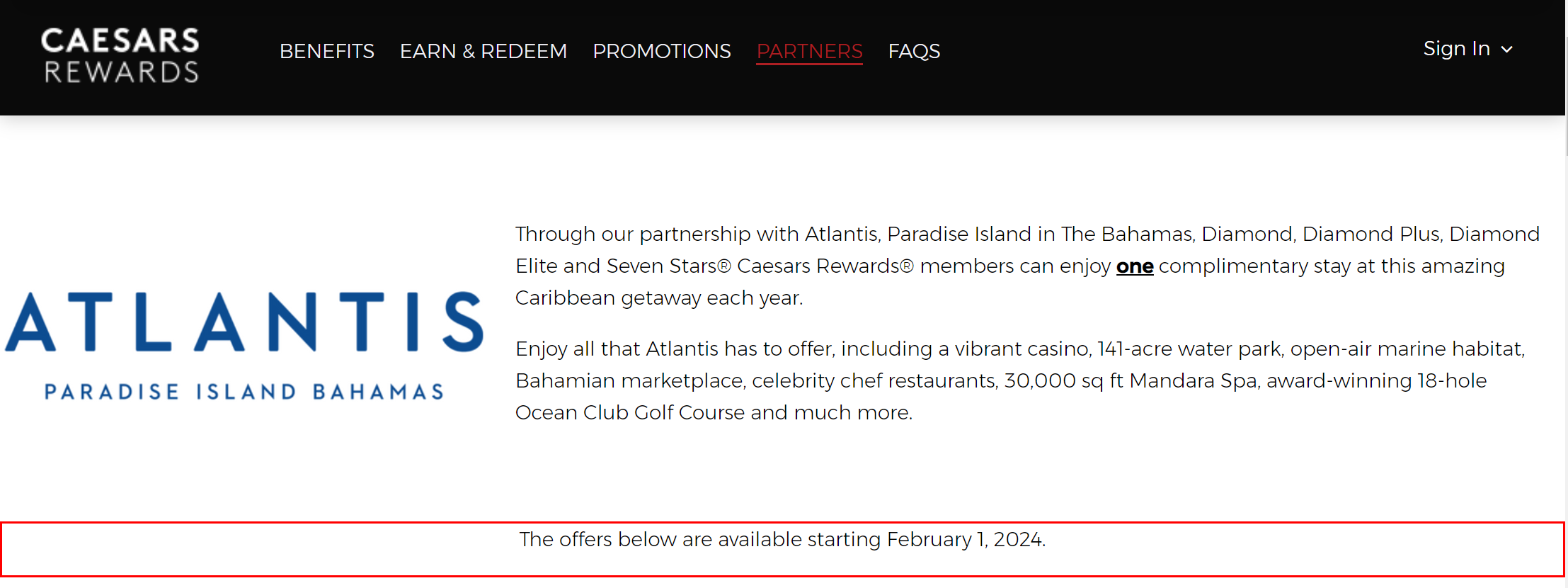
One of the most touted benefits of Caesars Diamond status is that you can get a free stay at the Atlantis Bahamas. This is a destination I wouldn’t ever have normally considered, but there was a really good sale fare from Vancouver to Nassau so I grabbed tickets a couple of months ago. This is usually a rational strategy: if there is a good deal on flight tickets, just grab the flights immediately and figure out the rest later.

I had no idea what I was setting myself up for.

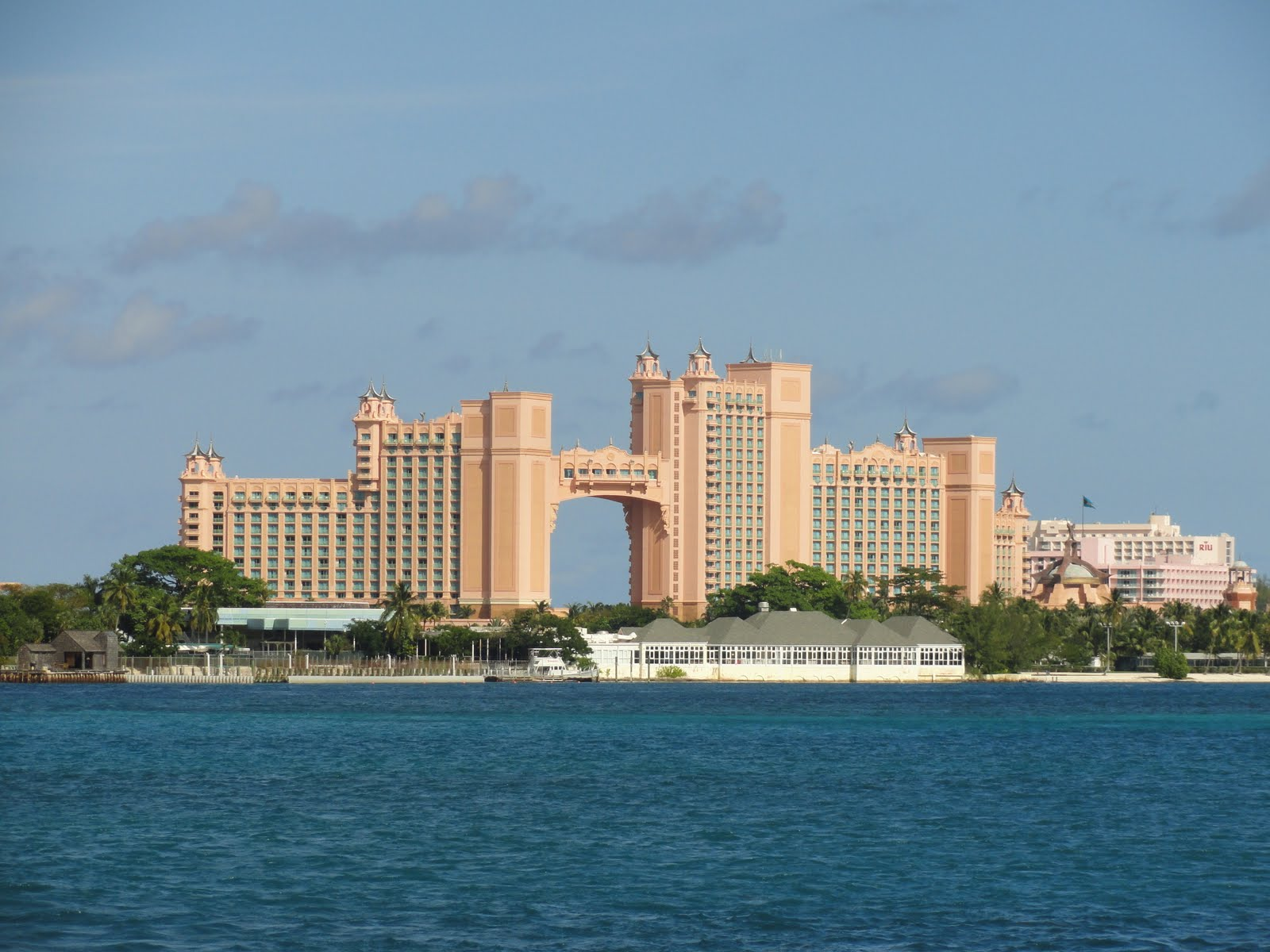
Looking at a picture is the closest you might come to staying at the Atlantis Bahamas

I called in December and was informed that the calendar wasn’t open yet for February. “Call back after the first of the year, and there should be good availability” said the friendly agent. OK, fine. I called in on January 2nd, and was informed that the calendar would be opening for February in mid-January, without any certainty as to exactly when. “I know this sounds crazy because it’s really soon, but call back after the 15th and we should be able to take care of you.”

OK, fine. I called back today, less than two weeks before my planned stay (starting on the 2nd of February). “Have you ever booked with us before?” Apparently there’s a process where the Atlantis has to confirm my benefit with Caesars, and that takes a couple of days, and they can’t make a reservation before then. But it doesn’t matter anyway, because the first 10 days of February are sold out. “Reservations have been open since Sunday,” the agent cooly stated. That’s funny, because the Web site says that reservations don’t open until February 1st.

Now, rooms aren’t actually sold out. You can buy all of the rooms you want. You just can’t use your Caesars benefit on those days. Atlantis manages its inventory like saver level frequent flier awards. They black out popular dates, and you’re more likely to be able to use the benefit for a midweek versus a weekend stay, and during hurricane season versus a nice time of the year to visit. While we all prefer different experiences when we travel, it’s personally difficult for me to justify using scarce vacation days on a destination like The Bahamas in order to stay in a casino resort.

So, I ended up spending 11,000 Choice points per night (transferred 1:2 from Citi) to stay in the Comfort Suites next door. They charge a $45 per night resort fee on top of it, so I spent the equivalent of $510 in points and cash for a 4 night stay. That stings, although it’s only 1/3 the cash rate for an equivalent room (Choice had availability for a garden view suite). There’s still a remote possibility that someone will cancel and I’ll be able to stay during my planned dates, but the possibility is remote.

Should you go for a Caesars Diamond status? Possibly, if it makes sense (I got my status matched from Wyndham, and I get my Wyndham status from a $95 annual fee credit card, which is less than I’d spend on parking each year at a conference I attend in Las Vegas). However, I wouldn’t gamble extra, or buy a Founder’s Card membership, with the intention of using this benefit. My experience actually trying to book and use the Atlantis Bahamas stay has shown that unless you’re willing to travel midweek in off peak months, this isn’t an easy benefit to use. Honestly, though, what should I have expected from a property named after a lost city? Maybe it doesn’t even exist.

Broken Capital One MFA Locking Up Points

I just got a frantic text from a friend today. “Capital One won’t let me transfer my points because I switched mobile phone carriers! I’m going to lose the award inventory, and they’re telling me that there’s nothing they can do. My points are locked up for an indeterminate period of time.”

Your Capital One points may end up in a weird AI-generated jail if you switch mobile phone companies

This is the first time I have heard of this problem, but indeed it’s true. Capital One has been notoriously fussy about its 2FA verification. They use a “data quality” service (such as the Phone Verification tool provided by Experian) to check whether a mobile phone number appears to be suspicious, and they can get back a lot of data from these services (mobile phone carriers and app providers can and do sell everything about you to data brokers, including carrier billing data and your approximate real-time physical location).

And that comes down to assumptions, and who is making them. To me, this has missing cultural context written all over it. Capital One has fired much of its US staff and moved a significant percentage of software development offshore. Incidentally, if you’re looking for a software job in machine learning, try looking in Bangalore. A carrier-authenticated mobile phone number totally makes sense for identity verification in a location like India, where everyone has a national ID card called an “Aadhaar” and real-name registration is required with mobile carriers using this national ID (I’m sure this capability is never abused).

This is not the case in the United States, where we don’t have a national ID, real name registration is not required for any form of telephone service, and data quality is inconsistent at best. First of all, the lines are blurred between mobile phones, VoIP services and land lines here: you can port to and from any of these and some services ring multiple devices on multiple networks at the same time. People don’t always register their phones with the carrier at all, or if they do, at the location where they live, or update the billing address when they move (most people get their bills online and pay automatically). When switching carriers, it can be weeks or even months before carrier data is updated, and billing data can be verified from the new carrier. So when you’re designing a system like this, and you have cultural context of how things operate in the US, you will understand that a mobile phone number isn’t authoritative and there should be other ways to verify a customer request.

Capital One, unfortunately, isn’t doing that. There is a whole Flyertalk thread of people complaining about this issue. If Capital One’s system can’t figure out how to send you a text message, you’re out of luck and you can’t transfer points. They’re in jail, customer service is a brick wall, and there are no alternate procedures. Nobody will help you and Capital One won’t even say where the failure is so you can try to get it corrected. That’s another hallmark of customer service in both American and mainland Chinese banking: if your situation doesn’t fit the script, nobody knows what to do and nobody will help you. Your job as a human is to figure out how to fit within the system as it’s (poorly) designed, and bend to the will of a computer.

My friend ended up completely stuck, and used some American Airlines points he forgot he had to book a different flight. For my part, I find it completely astonishing that Capital One has designed such a completely inflexible system for something as time-sensitive as points transfers. I totally get that SIM swapping is an issue, and that stolen credentials are a problem. There are, however, other entirely reasonable alternate verification methods that aren’t immediately obvious to someone in Bangalore. If any product managers are left in the US at Capital One, maybe they can help their offshore colleagues.

The jetBlue Pricing Twilight Zone

I just got off a call with jetBlue which made me feel like I was in the twilight zone. This February, I’m planning a visit to The Bahamas, my 78th country. I was able to find an outbound flight relatively easily with AAdvantage points, but the return is on a US holiday and that’s proving to be a challenge to find at any reasonable price. WestJet has a flight that gets back really late, and I can book it at a somewhat reasonable cost using points (via Qantas, of all airlines), but jetBlue has a better schedule.

My first call was to Qatar. It’s possible to use Qatar Avios to book jetBlue flights. I tried looking on their Web site first, but availability was limited, and they didn’t allow searching online for flights between Nassau and Vancouver. Usually the pricing isn’t very good, but availability is pretty generous and given that it’s a peak holiday travel date, availability matters. I figured that if the flights priced out at the usual 18,500 Avios between Vancouver and the east coast, using Avios would be a good potential option. Unfortunately, there wasn’t any availability using Avios.

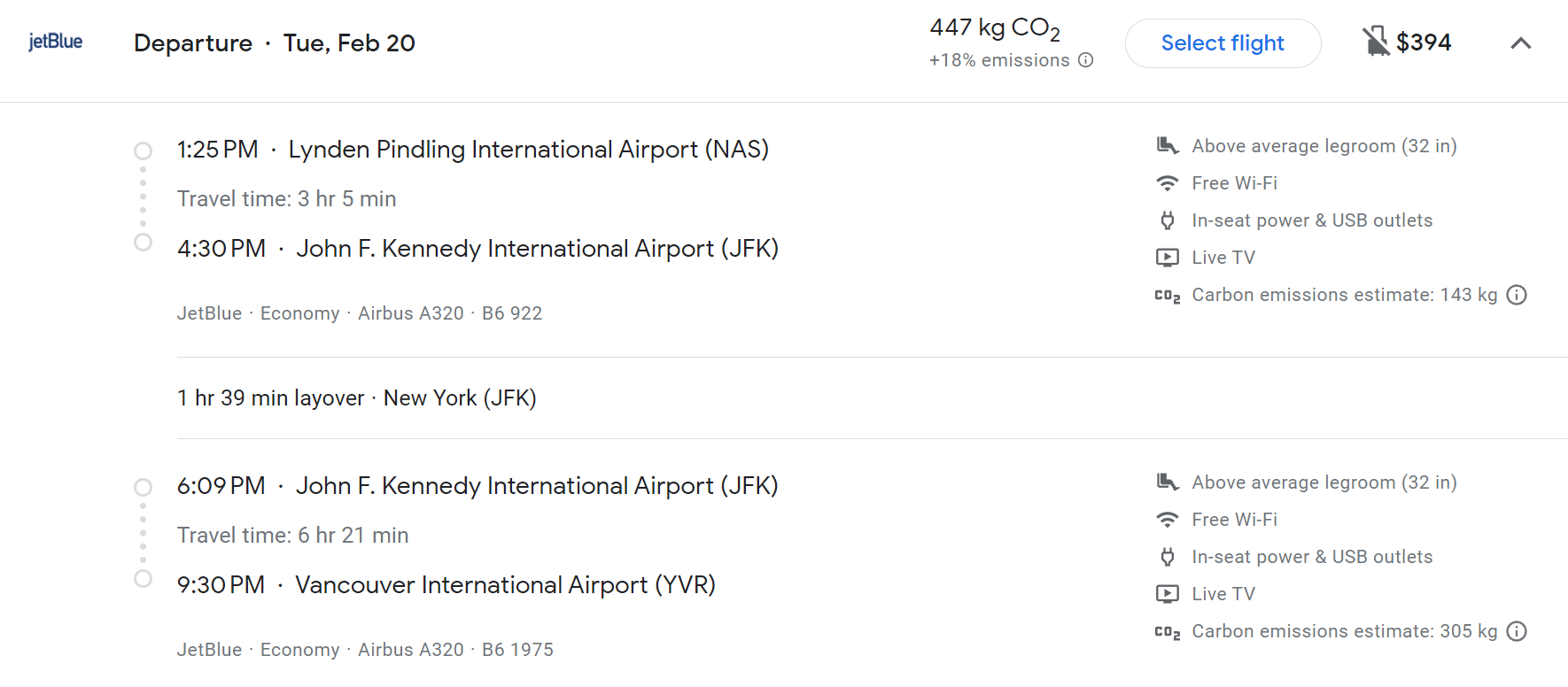
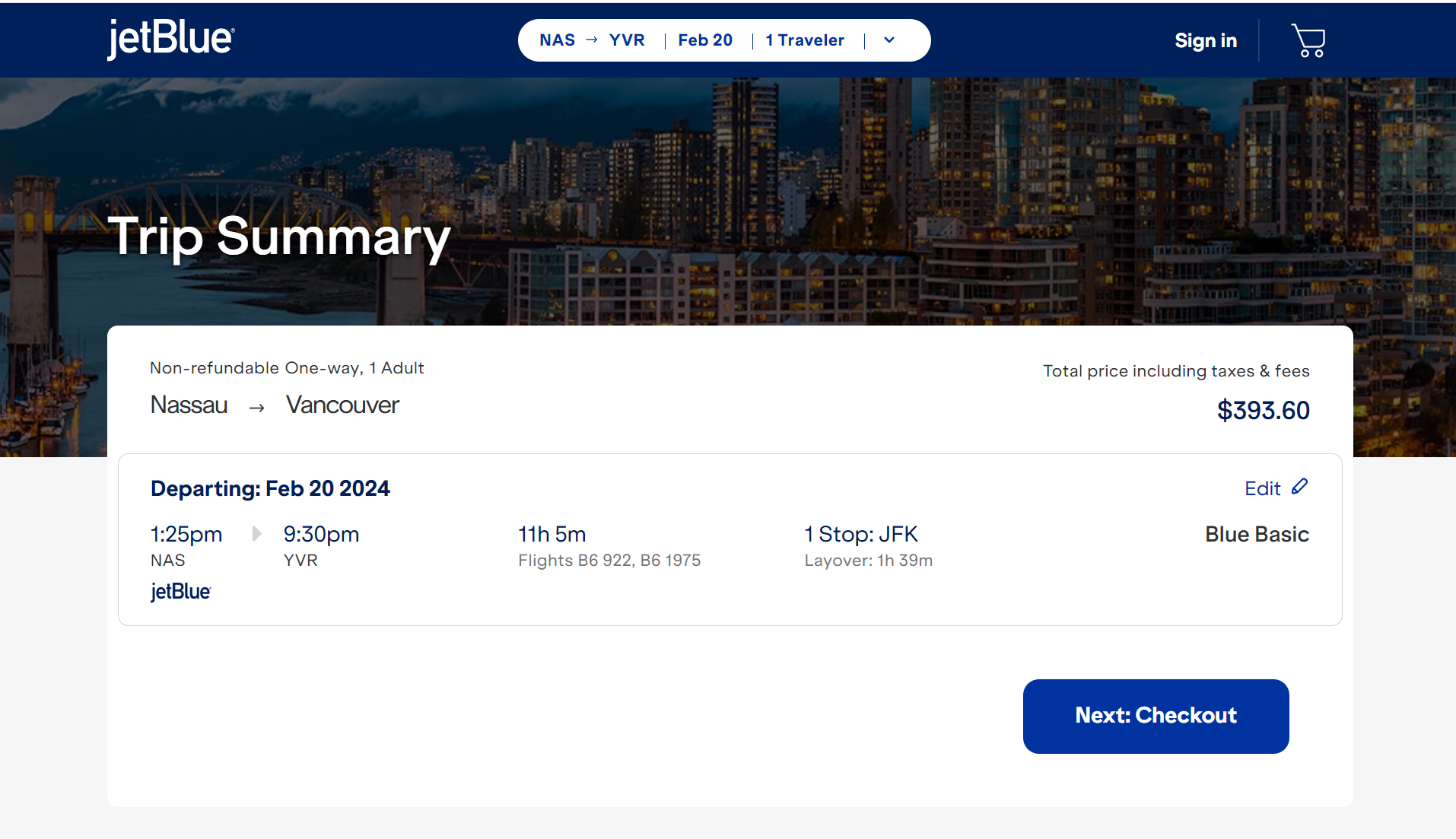
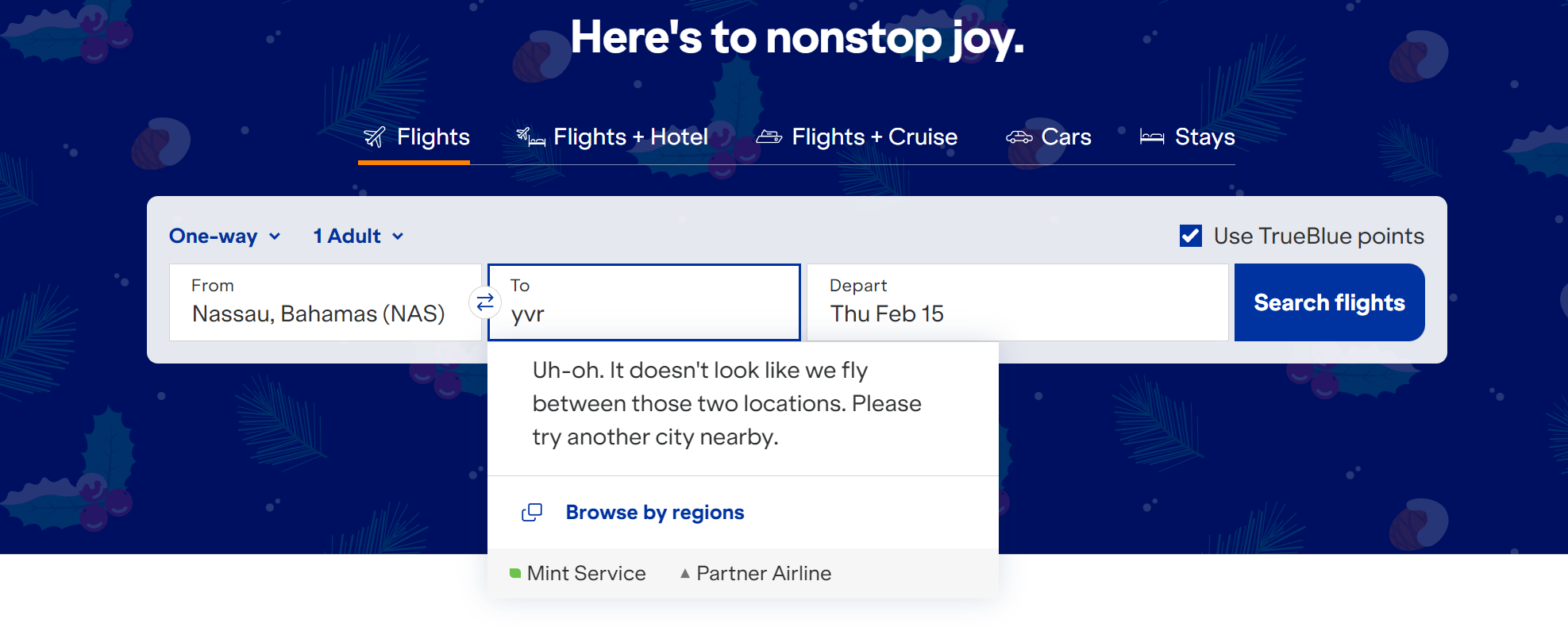
OK, fine. jetBlue allows you to book any flight they sell through their TrueBlue mileage program. Better yet, there’s a 25% transfer bonus from Chase Ultimate Rewards to jetBlue, and I have some jetBlue points. Why not check their program? Well, that’s not quite as easy a proposition as it sounds. jetBlue doesn’t have the best IT (this is an understatement) and even though you can buy flights from Nassau to Vancouver on their own Web site via Google Flights, you can’t search for them on the jetBlue Web site. I know it sounds crazy but here’s how it looks:

You can find an itinerary from Nassau to Vancouver on Google Flights
You can even purchase it directly on jetBlue
You can’t search for the flight from their homepage, though!

Obviously this doesn’t work, because it would involve paying actual money for these flights. We try to avoid paying cash at Seat 31B, so I picked up the phone and called jetBlue. If the Web site isn’t cooperating agents can usually figure out how to piece an itinerary together, and sure enough, the guy I called (who sounded like he was in the Caribbean) was able to figure it out.

There was only one problem. He couldn’t give me a price, because my account didn’t have any points in it. Could I transfer in some points so that he could price out the itinerary? Wait, what? That’s like handing a store your money (in a non-refundable way) before they’ll tell you the price of anything. “That just doesn’t make sense to me,” I replied. “Can you just give me a temporary credit in my account, or use a test account to search?”

I hit a brick wall. Eventually I escalated, and was routed to someone claiming to be with technical support in New York who also acted like a brick wall. “It has been this way for years” she emphasized, which didn’t make this insanity sound any more reasonable. I offered the same options – could they temporarily credit me some points to get around the IT issue? Could they use a test account? Nope! The only solution was to give them the equivalent of a $20 bill to find out whether I wanted to buy a ticket on their airline.

Maybe this is a blessing in disguise. By all accounts, jetBlue isn’t a very good airline (their operational reliability is spectacularly poor, and they charge for carry on bags) so flying WestJet probably makes the most sense here. Still, I feel like this policy is straight out of a Twilight Zone episode. jetBlue knows they are doing this. They have been doing it for years. And it’s absolutely not normal, in any reasonable sense.