I have written about Wyndham before, and there have always been some strange prices in this program. Quality varies enormously, and is inconsistent by brand. Spending points at a Days Inn often makes less sense than spending them at a much nicer resort. Occasionally, though, you find a perfectly good place to stay at a price that makes it worth dealing with Wyndham. I wanted to see how many of those opportunities survived the September 15 changes, so I compared the new directory with August’s award prices and dug into the cash rates. There are still good deals, including some that got better. Unfortunately, there are a lot more hotels that got more expensive, and some of the new prices are difficult to take seriously.
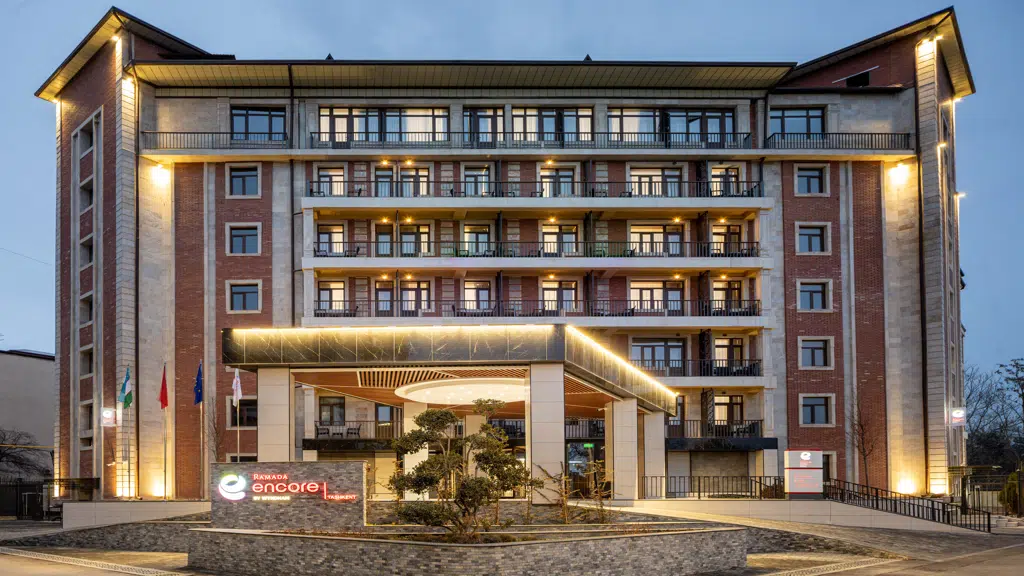
Here’s an example, which isn’t unusual (237 properties have similarly devalued). The Ramada Encore in Tashkent used to cost 7,500 Wyndham Rewards points per night. When I priced a standard king room for April 13–15, 2027, the cash price was $186.24 including tax for both nights. That’s a reasonable enough price, and at the old award rate, spending points would have been reasonable too. However, Wyndham now wants 60,000 points for the same two-night stay. I’d be getting about 0.31 cents per point, down from 1.24 cents against the same cash price under the old chart. Why would I do that?
How Bad Is The Devaluation?
Wyndham previously had three award levels: 7,500, 15,000 and 30,000 points per night. The new chart has four: 5,000, 15,000, 30,000 and 45,000. Wyndham points to its growing luxury, lifestyle and all-inclusive portfolio in explaining the changes, and the lower starting price is a genuine reduction. However, only 68 properties are in the new 45,000 point category. The increases go considerably further than adding a higher price for expensive resorts.
Of the 8,371 properties I could compare in both directories, 2,851 went up, 1,829 went down, and 3,691 stayed the same. That works out to 34.1% more expensive, 21.8% less expensive, and 44.1% unchanged. Most hotels didn’t increase, which is worth keeping in mind, but there were 56% more increases than decreases. Among the hotels that changed price, roughly 61% went up.
And these are big increases. A total of 2,042 properties doubled from 15,000 to 30,000 points. Another 511 doubled from 7,500 to 15,000. Then there are the 237 hotels, including the Ramada Encore in Tashkent, that went all the way from 7,500 to 30,000. That’s a 300% increase. Suppose you had saved 30,000 points for four nights at one of these properties. You can now book one night, and you’ll need to come up with another 90,000 points for the other three. That’s a pretty substantial change to a trip budget.
30,000 Points For A $55 Hotel
Some of the strangest changes are in Mexico City. The Ramada CDMX Perinorte, in Tlalnepantla in the northern part of the metropolitan area, went from 7,500 to 30,000 points. Its median comparable cash price was $54.65 per night. I’m perfectly happy to stay in a modestly priced hotel, but I’d expect the points price to bear some relationship to what the room costs. At that rate, you’re getting about 0.18 cents per point.
Several Hotel MX properties made the same jump. Here are the prices from the repeated checks, including Tashkent for comparison. The cash figures are median nightly prices across complete stays, including quoted taxes and mandatory charges, expressed in US dollars. I compared the same room with similar payment terms and cancellation conditions at least as good as the award’s.
| Hotel | Old points/night | New points/night | Cash/night | Value now |
| Ramada CDMX Perinorte | 7,500 | 30,000 | $54.65 | 0.18¢ |
| Hotel MX Congreso | 7,500 | 30,000 | $64.30 | 0.21¢ |
| Hotel MX Lagunilla | 7,500 | 30,000 | $73.56 | 0.25¢ |
| Hotel MX Aeropuerto | 7,500 | 30,000 | $102.51 | 0.34¢ |
| Hotel MX Zócalo | 7,500 | 30,000 | $108.05 | 0.36¢ |
| Ramada Encore Tashkent | 7,500 | 30,000 | $96.35 | 0.32¢ |
Now, Perinorte wasn’t a particularly good redemption before. At the same cash price, you’d have gotten about 0.73 cents per point. However, the airport property went from about 1.37 cents to 0.34 cents, and Zócalo went from 1.44 cents to 0.36 cents. Those were reasonable uses of points that have become very poor ones. These calculations use the same cash price on both sides, so they show what the award chart change did to the value. They don’t assume that cash rates stayed the same between August and September.
Tashkent is particularly puzzling because of the variability in quality and cost relative to price. The Ramada Encore, for example, has a collected guest score of 4.2 out of 5. It seems to be a perfectly nice hotel, but it just doesn’t cost very much. Elsewhere in the city, the Ramada, Wyndham Tashkent and Wyndham Garden all doubled from 15,000 to 30,000 points. The much more expensive Ramada Plaza was already 30,000. You now have several different properties, with different cash prices, all costing the same number of points. I don’t see much reason to spend 30,000 points at the Encore when paying cash is this inexpensive.
This turned up well beyond these two cities. Of the 3,816 properties selected for fresh cash-and-points checks, 1,420 repeatedly returned half a cent per point or less on comparable terms. At 89 of them, the same cash prices would have yielded more than a cent per point under the old chart. I specifically investigated likely bargains, bad deals and questionable prices, so this sample shouldn’t be treated as representative of every Wyndham hotel. Nevertheless, it’s a substantial number of places where using points is hard to justify.
What Do You Get For 5,000 Points?
There are 1,791 properties in the new bottom category, and I was interested to see what had landed there. A hotel for 5,000 points could be a very useful thing. However, of the 709 US properties at that level, 693 had a Wyndham guest score in the review data, and 622 of those scored below 3 out of 5. That’s almost 90% with bad reviews, and they skew to terrible: the median score is 2.4! These are guest reviews, to be clear, not hotel star classifications. I’m fine with a one-star hotel. A hotel whose guests are consistently unhappy is another matter.
Take the Travelodge Cleveland Lakewood. It dropped from 15,000 to 5,000 points, which looks generous until you read the reviews. Its August score was 0.7 out of 5 from 115 reviews. When I checked Wyndham’s public page again, it was down to 0.6 from 132 reviews. The Days Inn Grand Junction displayed 0.8 from 245 reviews. Wyndham’s scale allows zero scores, so these really are guest ratings below one out of five.
The Lakewood property actually qualified as a mathematical sweet spot at the new rate. You could get a good return for your points there, at least against the room’s cash price. I’d still have a hard time booking it with scores like these. I don’t need a fancy hotel, but I do need to be comfortable staying there, and a lower award price doesn’t address whatever is making so many guests unhappy.
Outside the US, the 5,000 point category looks considerably more promising. Among the 526 properties with Wyndham scores in the collected data, the median was 4.3 and 351 scored at least 4. There were another 556 international properties without a score in this comparison, so some homework is still required. Still, there’s a big difference between the reviewed hotels overseas and the US ones. This is where I’d start looking for the more useful price cuts.
The Advertised Price Isn’t Always What You Can Book
There’s also a problem with the directory itself. I found 50 dated discrepancies across ten properties between the advertised points price and the lowest available award quote. Some involved ordinary king and queen rooms, so there wasn’t an obvious explanation involving a larger unit.
The Baymont in Coralville is advertised at 5,000 points per night. For October 20–22, the booking system wanted 30,000 points for two nights in a king room. That’s 15,000 per night, or three times the advertised rate. The Baymont in Mankato, Days Inn Ocala North, Days Inn Minot and Wingate Sulphur Near Lake Charles also advertised 5,000 points but quoted 15,000 on the checked dates. Meanwhile, the Ramada Brooklyn Empire Boulevard is listed at 15,000, but the queen-room quotes were 30,000 per night.
It sometimes worked in the other direction. La Quinta Atlanta Douglasville was advertised at 30,000 points and quoted 15,000 for an ordinary queen room. Cozzet Victoria Bhubaneswar was advertised at 15,000 and quoted 5,000 for an accessible standard room. So the directory can both make a bad deal look good and cause you to overlook a better one.
Wyndham’s vacation-club awards are priced per bedroom, which can legitimately make a booking more expensive than the starting rate. A two-bedroom unit at a 15,000 point property costs 30,000 points per night. I accounted for bedroom counts, room counts and stay lengths before flagging these discrepancies. They don’t explain the ordinary hotel-room examples above. I don’t have an explanation for those, and Wyndham needs to reconcile the two prices. In the meantime, go all the way through to the room quote before transferring points or making plans around a hotel’s advertised category.
Where I’d Still Use Wyndham Points
After all of that, you might reasonably wonder whether there’s much left worth booking. There is. The repeated checks turned up 1,089 properties returning more than a cent per point after excluding exceptional price spikes and unresolved comparisons. To qualify, a hotel had to produce at least four usable stays across two travel periods, including weekday and weekend arrivals. As the Lakewood example demonstrates, though, a hotel can pass the price test without being somewhere you’d want to stay.
Some of the better-reviewed international properties are much more interesting. All of these dropped from 7,500 to 5,000 points per night. The values are medians across the usable non-peak dates checked, and the ratings are Wyndham guest scores from the collected review data.
| Hotel | Guest score | Reviews | Value at 5,000 points/night |
| Ramada Giresun Piraziz, Turkey | 4.7/5 | 255 | 3.07¢ |
| Wyndham Garden Hoi An Cua Dai, Vietnam | 4.6/5 | 52 | 2.52¢ |
| Wyndham Costa del Sol Trujillo, Peru | 4.4/5 | 120 | 2.18¢ |
| Wyndham Jingzhou, China | 4.8/5 | 207 | 1.94¢ |
| Wyndham Baku, Azerbaijan | 4.1/5 | 38 | 1.86¢ |
Giresun is on Turkey’s Black Sea coast, and places like Trujillo and Jingzhou are hardly the first destinations most people consider for a hotel-points trip. That makes these more interesting to me. I wouldn’t plan a trip solely to use 5,000 points, but I like finding reasonably priced accommodation somewhere I already want to go. One detail to watch at Giresun: the quotes were for smoking sea-view king rooms. Check that there’s a room you’re willing to sleep in before getting excited about the rate.
Even Mexico has some good reductions. Hotel VIVE MX el Marqués Querétaro went from 7,500 to 5,000 points, had a collected score of 4.7 from 81 reviews, and returned about 1.25 cents per point. That’s a reasonable use of points at a well-reviewed property, which is all I’m really asking for.
There are also exceptions in the US. Club Wyndham Cypress Palms in Kissimmee now starts at 5,000 points per bedroom per night, and the checked one-bedroom condos quoted at that price. The collected Google rating was 4.3 from 3,843 reviews. There’s a two-night minimum, so you’d be spending 10,000 points for two nights in a one-bedroom condo. That’s worth investigating, particularly compared with some of the motels Wyndham will sell you for the same number of points. Just remember to count the bedrooms when pricing a larger unit.
I’d also check what other booking sites are charging. At Discovery Bay, Expedia quoted $453.02 for a two-bedroom loft for November 10–12, versus 60,000 Wyndham points. That brings the value down to about 0.76 cents per point and knocked the property out of the recurring sweet-spot list. There were differences: Expedia’s rate was prepaid and nonrefundable, the award allowed cancellation until 72 hours before arrival, and the bedding descriptions varied slightly. I might pay more for the flexibility. However, someone willing to prepay could spend considerably less than Wyndham’s own cash quote suggested.
Don’t Forget Holidays And Special Events
Wyndham has retained fixed award pricing without seasonal increases, and that leaves a useful opportunity. A hotel that’s a poor redemption on an ordinary Tuesday can be a very good one during graduation, a football weekend, a convention or a local festival. The cash price can go up while the points price stays the same, provided an award room is available and the booking quote matches the price you expect.
I kept exceptional peak rates out of the recurring value rankings because a hotel’s most expensive weekend says very little about its usual value. However, when that’s the weekend you actually need a room, using points to avoid the cash bill makes perfect sense. Compare the award with the full price of accommodation you would realistically book, including fees and cancellation conditions. I’m not going to claim an enormous saving against an overpriced room when I’d simply have stayed somewhere cheaper.
It’s also worth trying different stay lengths and checking individual nights. Paying cash for the inexpensive nights and using points for the expensive ones can work well, although minimum stays may get in the way and you could have to change rooms. Some timeshare properties offer award inventory without selling a comparable room for cash at all. That can still be useful. There just isn’t a meaningful cash comparison to make for that booking.
I’ll keep checking Wyndham when I have an expensive date to cover, or when I’m heading somewhere with one of these better 5,000 point properties. The overseas reductions are genuinely encouraging. But I’d be very reluctant to accumulate points for an ordinary 30,000 point hotel without checking the cash price first. At the Ramada Encore in Tashkent, I’d pay the $186.24 and keep my 60,000 points for something else.
About the numbers: This analysis compares August award prices with Wyndham’s September 15, 2026 directory. The cash-and-points research comprised 20,856 stay checks across 3,816 selected properties, collected September 15–16. Values use quoted booking points and known mandatory charges. Recurring value lists exclude exceptional peaks and unresolved comparisons; poor-value comparisons require suitably comparable cash terms. Award prices are before card-specific redemption discounts. Guest scores come from online sources.